
Home Layout Design & Interior Design Trends: Creating Meaningful Focal Points That Reflect Who You Are
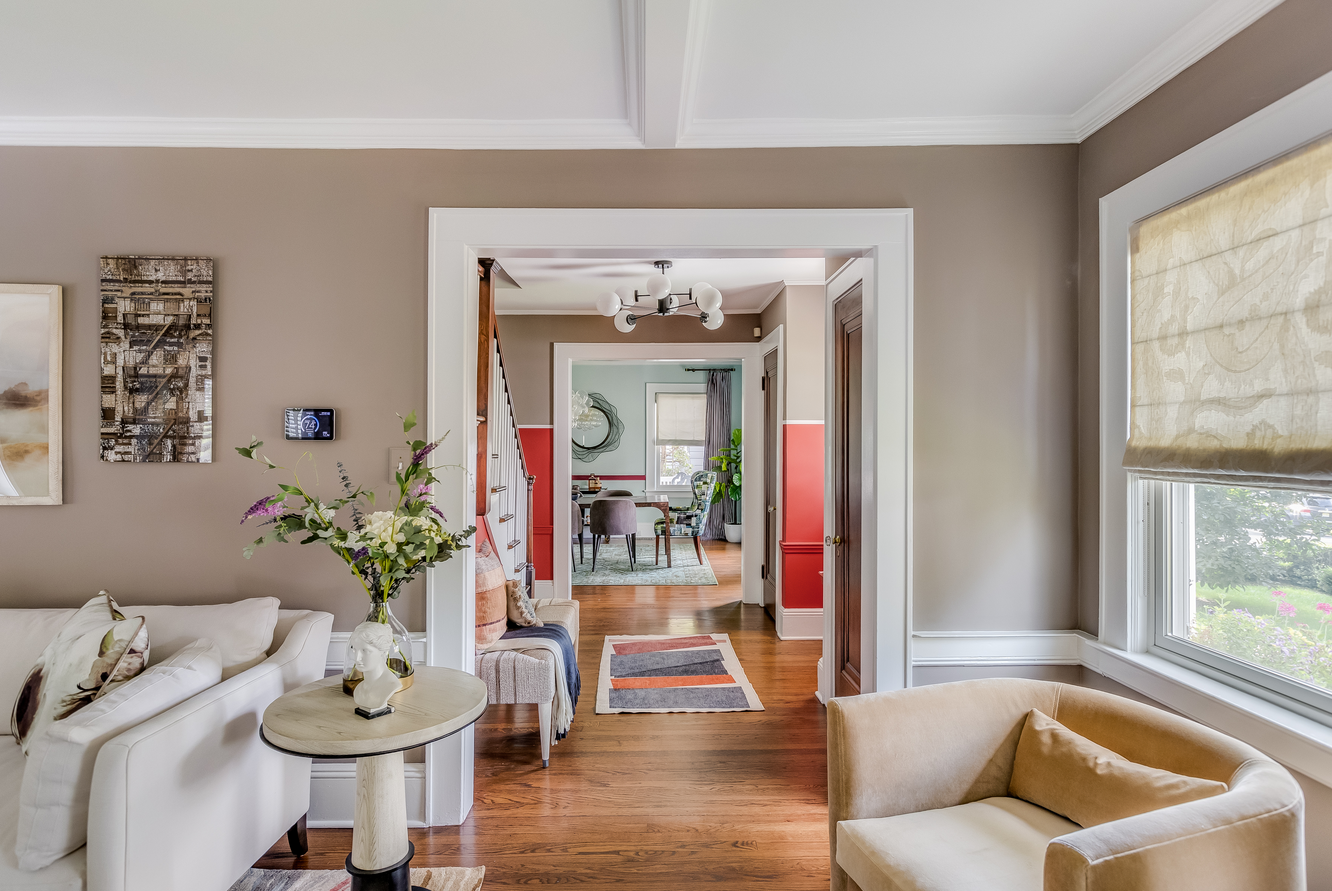
In today’s evolving world of home layout design and ever-shifting interior design trends, homeowners are increasingly seeking something deeper than fleeting aesthetic appeal. They want spaces that feel intentional: personal & grounded. A home should do more than look beautiful—it should guide you visually, support the way you live, and hold emotional meaning.
As an interior architect and owner of Lemon Grass Interior Architecture, one of the central beliefs I approach every project with is that a well-designed home requires thoughtfully placed focal points. These focal points provide visual guidance throughout a space, serve as emotional placeholders, and reflect the identity of the homeowner. When layout and focal intention work together, design becomes more than decoration—it becomes architecture in service of experience.
What Home Layout Design Really Means
Too often, home layout design is reduced to furniture placement. In reality, it is far more complex—and far more powerful.
At its core, home layout design addresses:
Circulation and movement
Sightlines and visual flow
Proportion and scale
Spatial hierarchy
Architectural integrity
A successful layout quietly guides you through a home. When you enter, your eye lands somewhere intentional. When you move from room to room, transitions feel intuitive rather than abrupt. When you sit down, you feel grounded rather than adrift.
Beyond the Floor Plan
A floor plan shows walls and doorways. Layout design considers what happens inside those boundaries.
Where does your eye naturally travel when you walk in?
Does the visitor perceive certain areas as off limits, more private, others as welcoming “public” spaces?
What anchors the room?
Is there visual confusion caused by competing elements?
Does the space feel balanced from every angle?
Without clear focal organization, even beautifully furnished rooms can feel unsettled. The human eye seeks guidance and hierarchy. When everything demands attention, nothing truly holds it.
Layout as Visual Storytelling
Every room tells a story. A thoughtful layout establishes the opening sentence.
Perhaps it’s a fireplace framed by custom millwork.
Perhaps it’s a sculptural light fixture hovering over a dining table.
Perhaps it’s a framed window view that becomes a living artwork.
The arrangement of architectural and interior elements determines whether that story unfolds seamlessly—or feels disjointed.
Interior Design Trends: Why Focal Thinking Matters More Than Ever
Contemporary interior design trends increasingly emphasize personalization, craftsmanship, and emotional resonance. We are seeing a shift away from trend-driven replication and toward intentional curation.
The Move Toward Meaningful Design
Homeowners are becoming more discerning. They want:
Materials with authenticity
Spaces that support real daily routines
Environments that reflect personal history
Design that endures beyond a single season
Interior Design that reflects their core & pleases their sense beyond the life expectancy of a trend
However, design elements can also introduce visual noise. Open shelving, bold textures, statement lighting, layered finishes—each can be beautiful. Without a guiding focal structure, these elements compete rather than collaborate.
Interior design trends should enhance a home’s architectural narrative—not overwhelm it.
Trend Fatigue and Visual Overload
In the age of constant digital inspiration, it’s easy to incorporate too many ideas into one space. When every wall has an accent treatment and every surface hosts a decorative moment, hierarchy disappears.
This is where focal intention becomes essential.
A room should have:
One primary focal point
Secondary supporting moments
Negative space that allows the eye to rest
Without this balance, every interior design approach can feel chaotic rather than cohesive.
Focal Points in Home Layout Design: Visual Guidance Throughout The Space
A focal point is more than a decorative feature. It is the visual anchor that organizes a room.
In refined home layout design, focal points accomplish three things:
They guide the eye.
They anchor furniture placement.
They establish emotional tone.
Primary vs. Secondary Focal Points
In most rooms, there should be a clear primary anchor—often architectural in nature.
Examples include:
A fireplace
A feature wall
A large window with a favorite view
Custom built-ins
A statement lighting installation
Secondary focal points provide rhythm and progression. As you move through a home, your eye transitions from one intentional moment to another. This layered approach prevents visual stagnation while maintaining clarity.
Visual Guidance and Movement
When layout and focal placement are aligned, the home feels intuitive.
Imagine entering a living space where:
Seating orients naturally toward a central architectural feature.
Circulation paths remain unobstructed.
Sightlines extend toward a carefully framed element.
The room “makes sense” without explanation.
This level of clarity doesn’t happen accidentally. It results from disciplined spatial planning and architectural awareness.
Emotional Placeholders: Design That Reflects Identity
Beyond visual order, focal points serve an emotional function. I often describe them as placeholders—design moments that hold meaning.
A home should reflect the individuals who live within it. That reflection can be subtle, but it must be intentional.
What Is an Emotional Placeholder?
An emotional placeholder might be:
A custom bookshelf displaying inherited volumes.
A curated art installation that tells a story.
A handcrafted dining table where family rituals unfold.
A textured wall finish that evokes calm.
These are not random decorative choices. They are anchors of identity.
Interior design trends come and go, but emotional placeholders endure because they are rooted in personal narrative.
Designing for Lifestyle, Not Algorithms
A thoughtfully designed home considers:
How mornings unfold.
Where conversations naturally gather.
How privacy and openness balance.
What sensory environment supports well-being.
Designing around lifestyle ensures that focal points feel authentic rather than imposed.
When I work with clients, especially here in northern New Jersey, the goal is never to replicate a magazine image. Instead, we create spaces that support real routines and meaningful interactions.
Case-Based Examples of Focal Thinking
To illustrate how this philosophy translates into practice, consider a few common residential scenarios.
Open-Concept Living Space
Open layouts are currently in fashion, however they often lack definition.
Without focal anchors, furniture floats awkwardly and sightlines feel unresolved.
In one scenario, a fireplace wall becomes the grounding element. Custom millwork extends vertically, drawing the eye upward and emphasizing architectural scale. Seating orients around this anchor, creating cohesion.
Secondary focal moments—such as a sculptural pendant over the dining table—provide progression without competing.
The result: clarity within openness.
Primary Suite Retreat
In a bedroom, the bed itself may not always be the strongest focal point. Sometimes, a framed window view or an architectural headboard wall establishes deeper impact.
By layering texture—perhaps plaster, wood paneling, or integrated lighting—the wall becomes both visual guide and emotional calm center.
Layout decisions support this anchor by aligning circulation paths and preserving negative space.
Transitional Entry
The entry is the first emotional signal of a home.
Rather than crowding it with decorative elements, a single intentional focal moment—such as a console paired with a curated artwork installation—creates presence.
The eye lands. The space breathes. The home introduces itself with clarity.
Preventing Costly Mistakes Through Professional Home Layout Design
Many homeowners attempt to address layout after construction is complete. This often leads to expensive adjustments and frustration.
Common mistakes include:
Competing focal points that dilute impact
Overscaled furniture that disrupts proportion
Ignoring sightlines from adjacent rooms
Over-layering trends without hierarchy or deeper meaning
Blocking natural circulation paths
I provide professional home layout design that includes special- & architectural planning, furnishings, lighting, and materiality and decor as an integrated system.
As an interior architect, my approach differs from surface-level styling. I evaluate:
Structural constraints
Flow & circulation
Natural light patterns
Architectural rhythm
Long-term functionality
Design elements my clients identify with and truly enjoy
This holistic thinking ensures that interior design trends are applied strategically—enhancing rather than overpowering the foundation of the home.
The Enduring Value of Intentional Design
Trends evolve. Colors shift. Materials cycle in and out of popularity.
But clarity of layout and meaningful focal placement remain timeless.
When a home has:
Clear visual hierarchy
Emotional anchors
Balanced negative space
Architectural coherence
it feels composed.
You may not consciously identify why a space feels grounded—but you experience it. The eye relaxes. Movement feels intuitive. The environment supports your daily rhythm.
That is the power of thoughtful design.
Designing With Intention
Ultimately, home layout design is not about filling rooms—it is about shaping experience.
Interior design trends can inspire, but they must be filtered through architectural discipline and personal narrative. When focal points serve both visual and emotional purposes, the home becomes a reflection rather than a replica.
At Lemon Grass Interior Architecture, our work centers on creating spaces that guide, anchor, and reflect. Each project begins with truly getting to know our clients and careful spatial analysis. It evolves through layered detail—always grounded in the homeowner’s identity.
If you’re considering refining your home’s layout or embarking on a full interior transformation, I invite you to begin with intention.
Let’s Create a Home That Reflects You
If you’re ready to elevate your home layout design and integrate interior design trends in a way that feels authentic and enduring, I’d love to connect.
Visit the contact page at Lemon Grass Interior Architecture to schedule a consultation and begin designing a space that truly reflects who you are.
Because beautiful design is not just seen—it is experienced.
To learn more about our services or to begin a conversation about your project, please visit our contact page. We look forward to helping you create a home that is as functional as it is beautiful.